Great quality of life depends on great quality of air. So, which are the cities in the US that are a breath of fresh air (literally!)?
We are living in times where increasing population worldwide and massive increase in transport related emissions have resulted in constantly declining air quality. Even then according to the 2019 World Air Quality Report by IQAir, the United States has managed to reduce overall emissions of air pollutants over the last few decades. Air pollution also depends on several criteria, and not just carbon emissions as popularly believed. Carbon emissions from transportation and economic activities are definitely a concern but there are other pollutants present in the air that might be much more detrimental to residents’ health.
The United States Environmental Protection Agency (EPA) specified AQI (Air Quality Index) is the best standard to measure the level of pollutants in the air. AQI consists of pollutants like Ground level ozone, Carbon monoxide, Sulfur dioxide, Nitrogen dioxide and airborne particles. Higher AQI figures implies greater levels of air pollution while anything over 200 AQI is considered to be hazardous to health as per EPA.
However, the main concerns are particulate matter in the air including dust, soot, smoke and liquid particles or aerosols. Particulate matter can be of the PM 10 type, which are inhalable particles 10 micrometers or less in diameter, can be a cause of irritations and health implications and are majorly released from activities on construction sites, or mining. However, it is the finer particles (fine dust) of 2.5 micrometers or lesser or PM 2.5 that causes major health concerns to citizens and reduces visibility when in high concentration in the air.
Antonio Guillem/Shutterstock.com
WHO determines that a prolonged exposure to PM2.5 can increase long-term risk of cardiopulmonary mortality by 6–13% per 10 µg/m3 of PM2.5 (8–10). Also, a study conducted in Europe – The Improving Knowledge and Communication for Decision-making on Air Pollution and Health (Aphekom) project- studies the impact on average life expectancy if PM 2.5 in polluted cities is reduced to WHO recommended levels. Among the 25 participating European countries, it was observed that they averaged at 10µg/m3 and residents could live 20 months longer on an average if PM 2.5 levels were perfect.
It has been observed that 40% of the US population is under threat of premature death and disease risks due to the present air quality levels as per American Lung Association, 2018.
So clearly, good air quality is not only linked to a good quality life, but also a longer life! So, if you want to live longer, you should be considering moving out of the 30 most polluted cities in the US and move to one of top 10 cities that are featured in this article.
We have based our research on the Air Quality Trends Data that track different air pollutants that affect individual cities and have ranked cities according to the lowest levels of PM 2.5 level measured in Wtd AM (µg/m3) for each of these cities, that have a population of 200,000 or more in MSA level.
That being said, North America still has one of the cleanest air in the world, with one of the lowest PM 2.5 levels. Over 80% of the cities have successfully met the WHO targets for PM 2.5. This does imply that 20% of the cities are lagging behind the set targets, however, some cities have clearly been doing a better job than others. The United States also has some of the best air monitoring networks, resulting in gradual improvements in air quality even with increasing population and overall energy consumption.
Of course, the recent improvements in air quality can be attributed to the unexpected Covid-19 crisis. The decreased energy consumption and emission levels have certainly spelt a respite for the quality of air around the world. But, as we get into the phase of economic rebuilding, emissions wise we are back to square one! Plus, the recent wildfires and climatic factors have resulted in deteriorated air quality in several places.
So are you considering moving for a longer and better life? Here are the 30 Cities With Best Air Quality in the U.S.
30. Atlantic City-Hammonton, NJ
PM 2.5: 6.7
PM 10 – ND
Apart from a month of bad air days and elevated ozone pollution days, Atlantic City-Hammonton region gets a good score on its minimal level of particulate pollution.
Roman Yanushevsky/Shutterstock.com
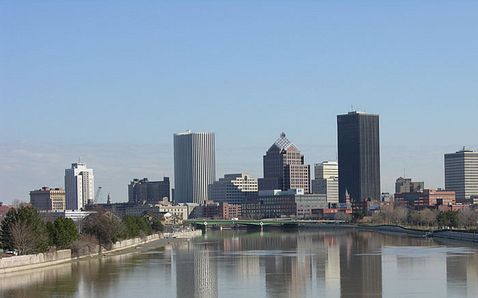
29. Rochester, NY
PM 2.5: 6.6
PM 10 – 24
Rochester air is moderately fresh throughout the year. The city experiences around 20 excellent air quality days!
28. Roanoke, VA
PM 2.5 – 6.6
PM 10 – ND
AQI is a constant average in the city, however, some pollutants like Ozone and NO2 are present in the air. Even though air is low on pollutants, allergens like pollen may cause air related issues.
Pixabay/Public Domain
27. Burlington-South Burlington, VT
PM 2.5 – 6.6
PM 10 – 14
The area is known for being one of the cleanest in the country. It experiences no bad air days! The pollutants level and short-term pollution are both kept under check.
Sean Pavone/Shutterstock.com
26. Santa Cruz-Watsonville, CA
PM 2.5 – 6.5
PM 10 – ND
Bright Santa Cruz days, might spell fresh air! However, the air quality of the area fluctuates between good and average. The current year wildfires have caused the air quality levels to dip to unhealthy levels.
Pixabay/Public Domain
25 .Norwich-New London, CT
PM 2.5 – 6.5
PM 10 – 30
The serene city also known as “The Rose of New England” mostly experiences fluctuating air quality conditions, however, apart from average levels of PM 2.5 and PM10 , there are no pollutants that are a major problem in the city.
24.Lincoln, NE
PM 2.5 – 6.5
PM 10 – ND
Lincoln experiences fresh air for about 90 days in a year and moderate air thereafter. Less than satisfactory air days are a scattered few.
23.Fargo, ND-MN
PM 2.5 – 6.5
PM 10 – 78
Though mild traces of NO2 and other pollutants are concerning, overall Fargo enjoys good air quality. The average air quality conditions last through most part of the year.
RRuntsch/Shutterstock.com
22. Lubbock, TX
PM 2.5 – 6.4
PM 10 – ND
Air quality remains at moderate level for most part of the year, with only a few days of deteriorated quality due to wildfire smoke.
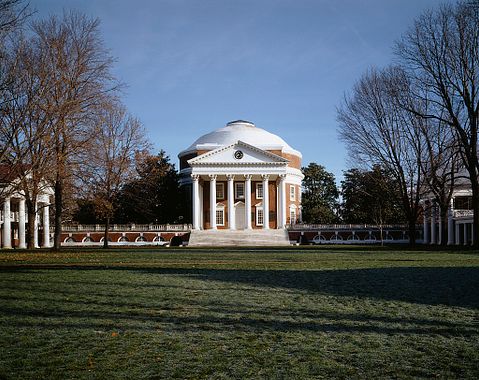
Charlottesville air quality meets the moderate standards, with low counts of most pollutants. AQI is at a constant satisfactory level.
20. Ponce, PR
PM 2.5 – 6.3
PM 10 – 94
The city located in San Juan, enjoys a favorable AQI. Though PM 10 appears to be high, dry climate could be a contributor to low allergen levels in the city
19. Lynchburg, VA
PM 2.5 – 6.2
PM 10 – ND
Pollutants have been on a decreasing trend in Lynchburg. The PM 2.5 for the city is at 6.2, which is moderate level while other pollutants are unknown in the air.
18. Syracuse, NY
PM 2.5 – 6.1
PM 10 – ND
The city of Syracuse has a whopping 337 good air days with the other 28 being moderate with no bad air quality days.
17. Provo-Orem, UT
PM 2.5 – 6.1
PM 10 – 53
Though the PM 2.5 level is not very high, the Provo-Orem region has a short-term pollution problem. NO2 levels are also on the higher end. The city’s pollution levels are not problematic throughout the year.
Kiseleva Vladislava/Shutterstock.com
16. Asheville, NC
PM 2.5 – 6.1
PM 10 – ND
Asheville’s annual BestPlaces Air Quality Index stands at 62%. The city, however, has its excellent AQI days which earns it a place among the 30 cities with the best air quality in the U.S.
15. Reno, NV
PM 2.5 – 6
PM 10 – 78
The otherwise clean and satisfactory air quality of Reno, sometimes is severely disrupted due to smoke from wildfires that pushes the air quality from unhealthy to hazardous as it occurs.
Hammon Photography/Shutterstock.com
14. Fort Collins, CO
PM 2.5 – 6
PM 10 – ND
While air quality had been satisfactory for Fort Collins,the rising ozone levels have been a cause of concern in the recent past.
Pixabay/Public Domain
13. Santa Rosa, CA
PM 2.5 – 5.7
PM 10 – 73
Santa-Rosa has a moderate air quality, with moderate pollutants in the air, however not enough in levels to prove harmful to residents.
Pixabay/Public Domain
12. Ogden-Clearfield, UT
PM 2.5 – 5.7
PM 10 – 50
Air quality Index is at 73% for the Ogden-Clearfield area. The city however has bad air days, and solid fuel burning is known to aggravate the air quality to unhealthy levels.
Johnny Adolphson/Shutterstock.com
11. Salinas, CA
PM 2.5 – 5.5
PM 10 – 76
Salinas enjoys moderately good air quality throughout the year. The city has cool temperatures, often with “natural air conditioner” winds that are also said to blow away smog further inland, keeping the city’s air clean.
When Jeff Bezos said that one breakthrough technology would shape Amazon’s destiny, even Wall Street’s biggest analysts were caught off guard.
Fast forward a year and Amazon’s new CEO Andy Jassy described generative AI as a “once-in-a-lifetime” technology that is already being used across Amazon to reinvent customer experiences.
At the 8th Future Investment Initiative conference, Elon Musk predicted that by 2040 there would be at least 10 billion humanoid robots, with each priced between $20,000 and $25,000.
Do the math. According to Musk, this technology could be worth $250 trillion by 2040.
Put another way, that’s roughly equal to:
175 Teslas
107 Amazons
140 Metas
84 Googles
65 Microsofts
And 55 Nvidias
And here’s the wild part — this $250 trillion wave isn’t tied to one company, but to an entire ecosystem of AI innovators set to reshape the global economy.
It’s a leap so massive, it could reshape how businesses, governments, and consumers operate worldwide.
Even if that $250 trillion figure sounds ambitious, major firms like PwC and McKinsey still see AI unlocking multi-trillion-dollar potential.
How could anything be worth that much?
The answer lies in a breakthrough so powerful it’s redefining how humanity works, learns, and creates.
And this breakthrough has already set off a frenzy among hedge funds and Wall Street’s top investors.
What most investors don’t realize is that one under-owned company holds the key to this $250 trillion revolution.
In fact, Verge argues this company’s supercheap AI technology should concern rivals.
Before I reveal the details, let’s talk about how some of the richest people on the planet are positioning themselves.
Bill Gates sees artificial intelligence as the “biggest technological advance in my lifetime,” more transformative than the internet or personal computer, capable of improving healthcare, education, and addressing climate change.
Larry Ellison — through Oracle, is spending billions on Nvidia chips and partnering with Cohere to embed generative AI across Oracle’s cloud and apps.
Warren Buffett — not known for tech hype — says this breakthrough could have a ‘hugely beneficial social impact.
When billionaires from Silicon Valley to Wall Street line up behind the same idea — you know it’s worth paying attention to.
Even as we admire what Tesla, Nvidia, Alphabet, and Microsoft have built, we believe an even greater opportunity lies elsewhere…
But the real story isn’t Nvidia — it’s a much smaller company quietly improving the critical technology that makes this entire revolution possible.
And judging by what I’m hearing from both Silicon Valley insiders and Wall Street veterans…
This prediction might not be bold at all:
A few years from now, you’ll wish you’d owned this stock.
The best part? You can discover everything about this company and its groundbreaking technology right now.
I’ve compiled everything you need to know about this groundbreaking company in a detailed, members-only report.
Trust me — you’ll want to read this report before putting another dollar into any tech stock.
For a ridiculously low price of just $9.99 a month, you can unlock a year’s worth of in-depth investment research and exclusive insights – that’s less than a single fast food meal!
Here’s why this is a deal you can’t afford to pass up:
• Access to our Detailed Report on this Game-Changing AI Stock: Our in-depth report dives deep into our #1 AI stock’s groundbreaking technology and massive growth potential.
• 11 New Issues of Our Premium Readership Newsletter: You will also receive 11 new issues and at least one new stock pick per month from our monthly newsletter’s portfolio over the next 12 months. These stocks are handpicked by our research director, Dr. Inan Dogan.
• One free upcoming issue of our 70+ page Quarterly Newsletter: A value of $149
• Bonus Reports: Premium access to members-only fund manager video interviews
• Ad-Free Browsing: Enjoy a year of investment research free from distracting banner and pop-up ads, allowing you to focus on uncovering the next big opportunity.
• 30-Day Money-Back Guarantee: If you’re not absolutely satisfied with our service, we’ll provide a full refund within 30 days, no questions asked.
If you’re thinking about getting in, don’t wait – because once Wall Street catches wind of this story, the easy money will be gone.
Space is Limited! Only 1000 spots are available for this exclusive offer. Don’t let this chance slip away – subscribe to our Premium Readership Newsletter today and unlock the potential for a life-changing investment.
Here’s what to do next:
1. Head over to our website and subscribe to our Premium Readership Newsletter for just $9.99 a month.
2. Enjoy a year of ad-free browsing, exclusive access to our in-depth report on the revolutionary AI company, and the upcoming issues of our Premium Readership Newsletter over the next 12 months.
3. Sit back, relax, and know that you’re backed by our ironclad 30-day money-back guarantee.
Don’t miss out on this incredible opportunity! Subscribe now and take control of your AI investment future!